Scottish traditional culture
Whiskey:
“Scotch” or a Scotch whisky is the name of whiskey from Scotland.
Under British law, whiskey among other things must meet the following conditions to be called Scotch whisky:
At first the whiskey must be matured for at least 3 years in oak casks.
Secondly the maturing must have happened in a customs warehouse registered in Scotland.
Finally the alcohol percentage must be at least 40%.
Scotch whisky is also grouped by the area it is produced in. For instance highlands and lowlands whisky. The difference is often in the process of maturing and the alcohol percentage.
Known Scottish whiskey brands includes:
Dalwhinnie, Talisker and Cragganmore.
Sources:
(http://en.wikipedia.org/wiki/Scotch_whisky)
http://www.scotch-whisky.org.uk/swa/43.html
Bagpipe:
The origin of the bagpipe is actually unknown. But there are some people who claims that it goes back to the old Egypt, Persia and Greece, while other think that it goes back to the old Roman empire where the emperor Nero has played the instrument. We can therefore conclude that it isn't a Scottish invention. The story then says that the bagpipe was brought to Ireland and Scotland by the Romans, and for some reason it later became their mark.
The reason why the bagpipe maybe can be traced back to such old civilisations is because that many herdsmen had the necessary materials at hand. These materials was a goat or sheep skin and a reed pipe.
Although the bagpipe is played in many countries of the world it is associated with Scotland. It has long been used by Scottish regiments to play military music.
The bagpipe was developed as an outdoor instrument, as a way to stir soldiers to war. Its very high volume allowed it to be heard over the sound of battle.
Sources:
(http://en.wikipedia.org/wiki/Bagpipes)
http://www.bcfpb.com/id11.html
http://answers.yahoo.com/question/index?qid=20090516234156AAvtLkQ
Tartan:
Tartan is a pattern, woven coloured stripes. Often seen on Scottish kilts, and associated to Scotland.
It is the national dress of Scotland.
In the end of the 18th century the Scottish Regions each had different patterns of tartan, and some Scottish clans also had their own tartan, if it was a very big or very important clan. Often you could tell where people where from by the pattern of their tartan.
Today we see tartan everywhere, on different items of clothing. But also on other materials than clothing
onsdag den 30. marts 2011

søndag den 20. marts 2011
A short description of a scene from Train Spotting
One of the important scenes in ”Train Spotting”
I believe that one of the most important scenes in the movie, Train Spotting, is the scene where our protagonist is laying in bed in his old bedroom from when he lived with his parents. This is the turning point in the movie where the protagonist becomes clean and realizes that he has to choose the right path. He sees amazing and terrifying things when he is sobering up from a bad trip. The dead baby for example. And that is why he know he has to stay sober. You can say that it is the point of no return for the protagonist in the movie.
I apologize for the short description of this scene. It’s late and I’m having hangovers. Now let us have a nice trip!
lørdag den 12. marts 2011

Classical Architecture in Edinburgh
Opgave: Fremlæggelse på stedet indeholdende:
a. Præsentation af bygningen, dens opførelsesår, arkitekter, oprindelige formål, historie, evt. nuværende brug/fremtid.
b. Grundplan: rektangulær, kvadratisk, rund, fundament, fremspringende mure, antal rum (hvis muligt).
c. Søjler: antal og placering, dorisk, jonisk, korintisk, kapitæler, overbygning.
d. Skulpturudsmykning: gavle, metoper, frise.
e. Hvilke antikke forbilleder er der? Forskelle og ligheder med antikken? Hvilke klassicistiske træk er der? Historicistiske træk?
f. Tolkende del: kunstnerens/arkitektens budskab, slutning fra værket til typiske træk ved tiden og samfundet, ”tidsånden”. Hvorfor er der anvendt græsk/romersk arkitektur? Hvilke værdier ligger der i den klassicistiske arkitektur, og hvordan hænger det sammen med punkt a?
Forberedelse: find oplysninger og billeder på nettet i denne time. I kan jo selv finde ud af en masse om arkitekturen ved at se på forskellige billeder og bruge jeres oldbog.
Produkt: mundtlig fremlæggelse hvor man peger og fortæller. Et ark til udlevering med ”key facts” (navne, årstal, søjletyper etc.), da det er svært at tage noter, når man står op. Man kan få sin oldlærer til at lave kopier af arket før på fredag…
God fornøjelse!
1 & 2 Old Royal High School & the Robert Burns Monument
http://en.wikipedia.org/wiki/Old_Royal_High_School,_Edinburgh
http://www.robertburns.plus.com/MonumentsEdinburgh.htm
3 & 4. The National Monument & Nelson Monument on Carlton Hill:
http://en.wikipedia.org/wiki/National_Monument,_Edinburgh
http://en.wikipedia.org/wiki/Napoleonic_Wars
http://en.wikipedia.org/wiki/Nelson_Monument,_Edinburgh (Ikke særligt klassicistisk, men alligevel.)
http://www.edinburgharchitecture.co.uk/national_monument.htm
http://edinburghnews.scotsman.com/edinburgh/Architect-flags-up-plan-to.2521669.jp
Bemærk: “folly” kan også betyde ”kunstig ruin/tempel.”
5 & 6. The Dugald Stewart Monument on Carlton Hill:
http://en.wikipedia.org/wiki/Dugald_Stewart_Monument
http://en.wikipedia.org/wiki/Choragic_Monument_of_Lysicrates
http://en.wikipedia.org/wiki/Dugald_Stewart
Se også på: The Playfair Monument
http://www.edinburghseasons.com/2009-07-12/the-playfair-monument-on-calton-hill/
http://en.wikipedia.org/wiki/William_Henry_Playfair
7. New Town
http://en.wikipedia.org/wiki/New_Town,_Edinburgh
http://whc.unesco.org/en/list/728
Hovedfokus på byplanlægning, og de to torve i hver ende af George Street: Charlotte Square og St. Andrew Square.
http://en.wikipedia.org/wiki/St._Andrew_Square,_Edinburgh
http://en.wikipedia.org/wiki/Charlotte_Square
Gå lidt mere i dybden med disse to ting:
http://en.wikipedia.org/wiki/Dundas_House
http://www.edinburgharchitecture.co.uk/melville_monument.htm
8. The Dome
http://en.wikipedia.org/wiki/The_Dome,_Edinburgh
http://www.thedomeedinburgh.com/history.html
http://www.thedomeedinburgh.com/
9. National Gallery of Scotland
http://www.nationalgalleries.org/aboutus/page/1:173/
http://www.nationalgalleries.org/visit/page/2:121:2/
http://en.wikipedia.org/wiki/National_Gallery_of_Scotland
Se hele ruten her:
søndag den 20. februar 2011
Peter Pan - J.M. Barrie

Peter Pan - Chapter 1
Wendy knew every child would grow up, except for one. One time when she was 2, she ran around the garden and plucking flowers, when her mother, Mrs. Darling, suddenly lifted her up and cried “Why can’t you stay like this forever?” . After that day, Wendy knew she would grow up.
Wendy was the chief one in the family. But before her, Mrs. Darling was. She was a beautiful and a romantic lady. Before in time, every man tried to come to her and get her, but Mr. Darling came first.
Even though Mrs. Darling loves her husband, but she still had an inner box of her she haven’t told him about. Mr. Darling knew she had one and he was frustrated about it. He once told Wendy about how she not only loved him, but respected him. But yet she didn’t reveal her inner box.
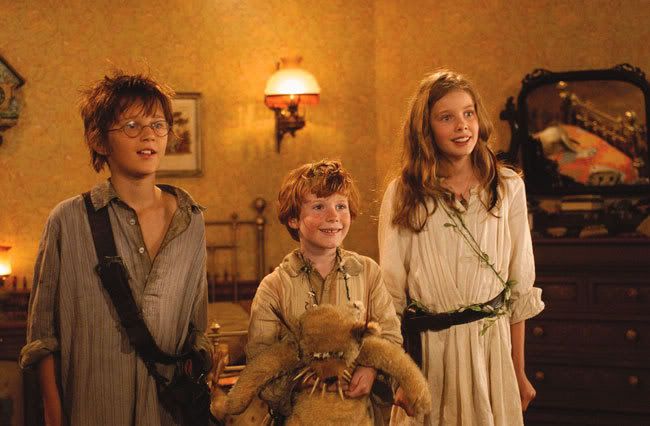
The Darling family had three children. Firstborn was Wendy, then John and last came Michael. But after having Wendy, the Darling family didn’t know they had enough money for more children, but after some calculations they discovered they had more than enough.
We are introduced to the family dog and nurse Nana.
 She takes care of the children and nurses them when they're sick and follows them to school and even though Mr. Darling knows that she is a very good nurse, he still thinks about what the neighbours think of them. Mr. Darling also feels like Nana doesn't admire him, but Mrs. Darling always assures him that she does.
Until Peter Pan came they had had a happy little family, but then he came and interrupted them.
It started one night, when the children were put to sleep, and the mother tidied the children’s minds up. She sees the name Peter written all over. Then the storyteller tells us about the map of a child’s mind. It is very complicated, and filled with special features. This explanation leads him to the description of the island Neverland, which is very much like a land from a fairytale, with beautiful, vigorous nature, and princes and princesses. And everybody has been at Neverland, as a child, even though they can’t remember it. When you go to Neverland, you live somewhere. It is told that John lives in a boat turned upside down, Michael lives in a wigwam, and Wendy lives in a house made of leaves.
After being confused about this Peter Pan’s appearance she begins to recall him from his own childghood, and suddenly she is very aware of whom this guy is. Mrs. Darling consults her husband about Peter, but he is not worried.
One day Wendy talks to her mother about a dream she had. It was about Peter Pan, who had been sitting in her bed. And actually Wendy thinks it is a true story, but her mother refuses. But something strange has been found in her room. It is some leaves, which reveal that Peter Pan actually has been in the nursery room. And suddenly Mrs. Darling begins to believe in what is about to happen to her children.
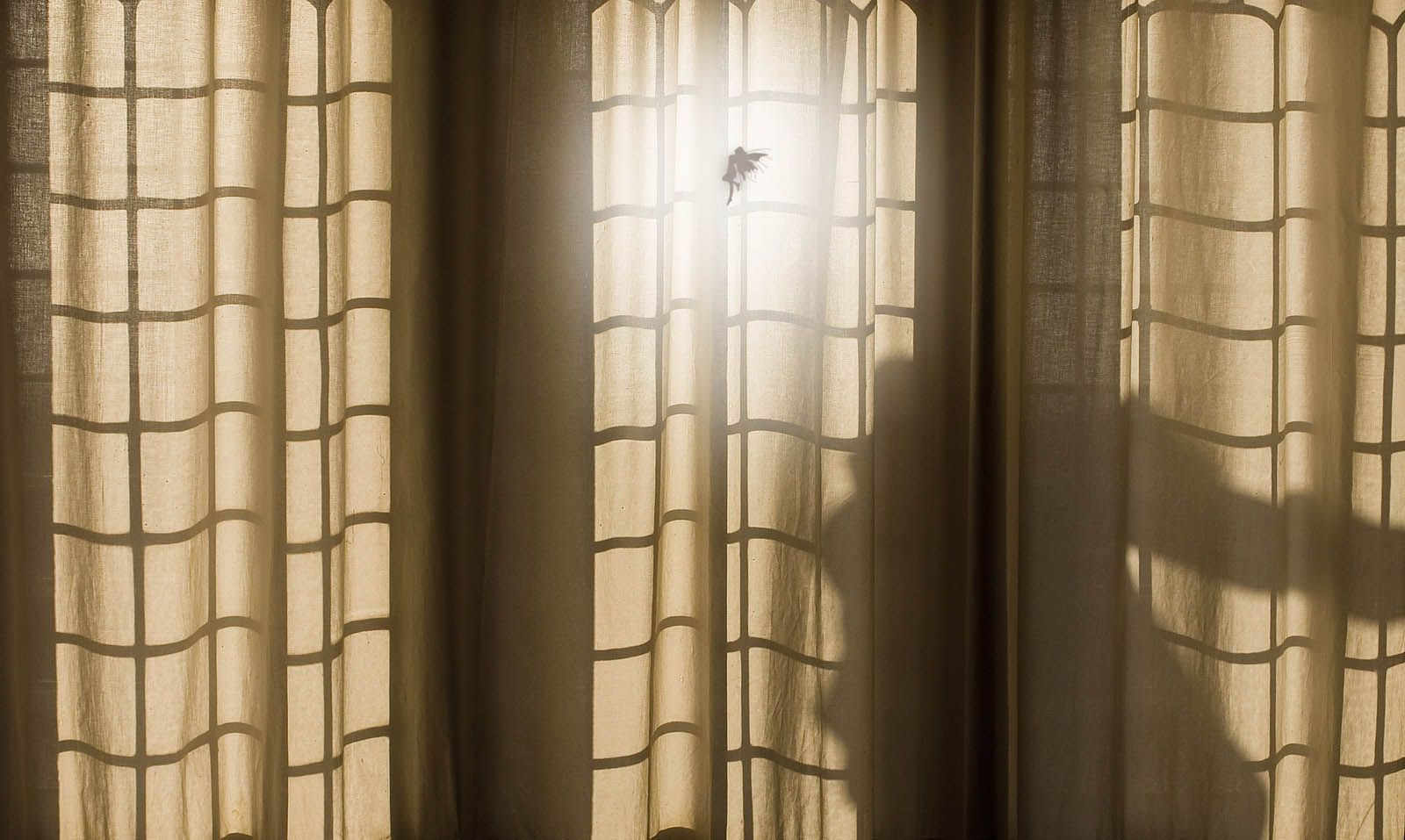
In the end of chapter one, the children’s real adventure begins. It all starts with all of them being asleep, when Mrs. Darling wakes up because of a light from the nursery room (the light turned out to be from Tinkerbell). She sees Peter Pan coming in through the window. Immediately Mrs. Darling knows that this is Peter Pan. Characteristic about him was that he looked very much like her kiss.
Peter Pan - Chapter 2
The second chapter in Peter Pan is a bit complicated because of its structure. What happens in the beginning of the chapter does actually first happen way later in the story, where Mrs Darling is only seconds from stopping what seems to be a kidnapping of her children. The “kidnapping” does not take place until the chapter three, but even though we hear the parents discussing the kidnapping in this chapter two.
 The parent reminisce about the last evening with their children where they are all in the children’s room, and the boy Michael does not want to take his medicine. Mr Darling tries to trick his son by saying that if Michael drinks his medicine, Mr Darling will drink his. After some discussion back and forth Michael takes his medicine, while Mr Darling quickly smuggles his into the water bowl of the dog. The whole scene in the children’s room is about the parents preparing to go to a party. They are not very pleased with leaving the children, but in the end they do. The beginning of the chapter, when Mrs Darling realises that the children are missing, is when she returns from this party. The parents are then afterwards sitting in the living room and blaming themselves for what happened. The most characteristic fact about this talk is that neither one of them is blaming the other.
Peter Pan - Chapter 3
In the end of chapter three the parents leave for a party and hereafter the children are being put asleep.
 Suddenly Peter’s shadow is jumping into the room, being followed by Tinker Bell the fairy. Peter Pan thereafter arrives and searches for his shadow but is not able to find it. Tinker Bell helps him and says that the shadow is in a box and Peter tries to stick the shadow into him with soap. Apparently this doesn’t work and Peter starts to cry, which wakes up Wendy.
Peter and Wendy starts to talk with each other and Wendy is very surprised by a lot of the information that Peter tells her – his address, that he has no parents etc.
Wendy misunderstands why he is crying and believes that it is due to having no parents, but Peter explains that it is about his shadows. Wendy helps him catch it and then she sews it to his leg.
Hereafter Peter acts cockily and Wendy pretends to be sad and hides under her sheets in the bed. But Peter quickly charms her by saying that she’s worth more than twenty boys. She gets really happy and wants to kiss him, but he misunderstands what she’s doing so instead of embarrassing herself, she gives him a thimble and says that it is a kiss. Then he wants to give her a kiss in return and she receives an acorn button.
Hereafter he tells about his birth – he ran away because his parents had already planned his live. He didn’t like that so he ran to Kensington Garden and grew up with fairies. Wendy is very impressed by the fairies so he tells a bit of information about them, for example how the first fairy were born. He also tells that there’s a fairy for each boy and girl. If the children don’t believe in fairies, they die.
 Hereafter he tells Wendy about Tinker Bell and Wendy get’s very excited. She wants to meet her really bad, but first Peter tells about the lost boys in Neverland, pirates etc. Peter kicks John out of bed and as a reward Wendy kisses him, which she now calls “a thimble”. Peter kisses her in return and now Tinker Bell gets very angry and jealous.
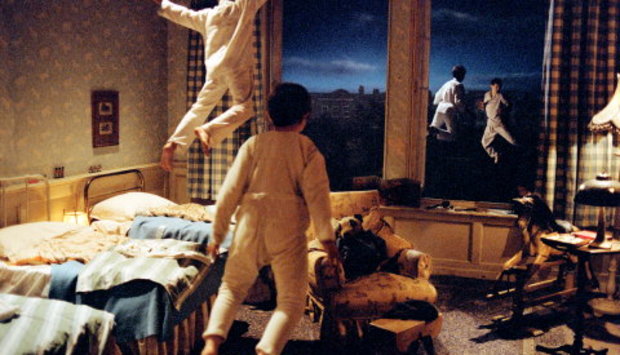
Peter persuades Wendy to come with him and teaches her and her brothers how to fly. Meanwhile the dog, Nana feels uncomfortable about the situation and runs out to the party that the parents are attending. She drags them home with her, but when they arrive at the nursery, the children are gone.
tirsdag den 1. februar 2011
Irvine Welsh og J. M. Barrie
Irvine Welsh
Irvine Welsh was born in Edinburgh, Scotland. He had a very confusing life in the early years and couldn’t remember that much, but he knew that his family and he moved a lot from town to town. In the age of 16 Welsh left Ainsley Park Secondary School while working with different jobs at the same time. In the seventies Welsh moved to London where he was fascinated by the punk culture. But reality bit him. Because he left school early he needed to get more educated if he wanted to get better jobs. And it paid off. He began to get better jobs but he was homesick and in the end he: “found a nice lassie and settled doon”, returned to Edinburgh, started working at the city council and began to study at Heriot Watt University. Welsh was very happy being home again and inspired by other authors such as Kevin Williamson, Duncan McLean, Alan Warner and Barry Graham and thrilled by the rave scene he started writing. And by putting old diary notes together he made a draft of what later would be a success, Trainspotting. Which … will tell about little later. Parts of the draft, a novel, were published in 1991 in the West Cost Magazine and by help from McLean and Williamson the novel got published in other magazines. And then McLean recommended Welsh and Trainspotting to Robin Robertson, a director of publishing agency called Secker & Warburg, whom decided to publish Trainspotting.
When Trainspotting came in the stores in 1993 it turned out to be a popular novel, and Irvine Welsh became very famous for his work. Even though his job with Trainspotting was so acknowledged, he was rejected from a Booker Prize because two female judges felt offended by it. The critic was hard, but Trainspotting was both made into a film and a stage play. The stage play was the first of them, and became the start of Irvine Welsh's career. The play was shown for the first time at the Glasgow Mayfest and later on it took part in the Edinburgh Festival. This resulted in Welsh quitting his day job, because he got so much success with the play, and now had to tour around in UK. When the film was released in 1996 Welsh really became a respected author among the UK-citizens. And when his latest novels, with the more sensational titles (“Porno”, “The bedroom secrets of the master chefs”) was published, his popularity also went strong in Canada and the states.
As a new thing Irvine Welsh has gone into the film production business. He has become a partner in Four Ways films and in Jawbone.
Novels:
• Trainspotting
• Marabou Stork Nightmares
• Filth
• Glue
• Porno
• The Bedroom Secrets of the Master Chefs
Crime
Writing style:
He is known for writing in his native Edinburgh scots dialect.
Some international versions of his books have included a glossary in the end, because some may have difficulties understanding the text, without knowledge to the dialect.
In his novels the characters are often present in several of them, so they kinda share the universe. It's the same characters you follow, through several books.
Inspiration:
Welsh was in the London punk scene environment for a while, which may have been an inspiration in his writings.
An example is the novel 'Trainspotting', which is about a group of young people in Edinburgh, who are heroin addicts - which is also the main topic.
The novel explores what causes drug addiction and what sustains(keeps it going/opretholder) it.
The novel is very popular, have even recieved cult status, and have also been made into a film.
Main topics in his novels:
The topics in Irvine Welsh is mainly drug use.
But another important theme in the stories is the scottish working class and scottish identity in the period from 1960 until today.
The topics he write about also includes:
• The rise and fall of the council housing scheme
• Denial of opportunity
• Sectarianism
• Football
• Hooliganism
• Sex
• Suppressed homosexuality
• Dance clubs
• Low-paid work
• Freemasonry
• Irish republicanism
• Sodomy
• Class divisions
Emigration
..and, perhaps most of all, the humour, prejudices and axioms of the Scots.
J. M. Barrie
J. M. Barries biggest success was the play about Peter Pan – the story about the boy who didn’t want to grow up. The inspiration for this play came when he met the woman Sylvia Llwelyn Davis. She had four sons, and their father had just died, so Barrie became a kind of guardian to them. He played with them in their garden, and from the stories they made up while playing, he wrote the play.
The Land Neverland already developed when Barrie was a young boy. When he lost his older brother David and watched his mother’s greave, he had to grow up, and so he grew up way too quickly, and he didn’t really understand what became of the boy in him. And so he told himself that he went to Neverland. A wonderful place with no harm, only fun. And when he met the Davis-boys, he used Neverland to tell their story.
The character of Peter Pan is named after the next youngest boy, Peter. The story about it is that Peter tried to grow up very fast because of his fathers death, and Barrie didn’t want the boys to grow up. He loved kids because they have this wonderful imagination, and he hated grown-ups because they were so boring. So Peter, who wanted to grow up, inspired him to write a story about a boy, who didn’t want to grow up.
But the funny thing is that the Peter Pan-character was more like a Barrie himself. In the movie ‘Finding Neverland’ this is described in one of the last scenes. It’s just after the premiere of the play and some of the audience hear that Barrie calls Peter ‘Peter’, so they say ‘Oh my God, it’s Peter Pan, this little boy is Peter Pan”. And then Peter looks up at mr Barrie and says “No, I’m not. He is.” It was Barrie who didn’t want to grow up. He always stayed a child in his mind, even though he had to grow up on the outside. So Peter Pan is in a way a story about Barrie himself.
James Barrie was a Scottish journalist, playwright and children's book writer.
Barrie became world famous with his play and story about PETER PAN (1904), the boy who lived in Never Land, had a war with Captain Hook, and would not grow up. The first name of Peter Pan was taken from Peter Llewellyn Davies
James Matthew Barrie was born in the Lowland village of Kirriemuir, in Forfarshire (now Angus). He was son of David and Margaret Barrie. They had ten children, and Barrie was the ninth. James Barrie heard tales of pirates from his mother, who read her children adventure stories in the evenings, and many of the stories concerning it inspired later Barrie's work.
When Barrie was seven, his brother David died in a skating accident. David had been the mother's favorite child, and she fell into depression after his dead. Barrie tried to gain the mothers affection by dressing up in the dead boy's clothes. The obsessive relationship that grew between mother and son was to mark the whole of his life. After her death Barrie published in 1896 an adoring biography on her.
At the age of 13, Barrie left his home village. At school he became interested in theatre. His classmates observed Barrie like an outsider, they were tall, interested in girls, while he remained small and apparently never had a girlfriend. Barrie studied at Dumfries Academy at the University of Edinburgh. After working as a journalist for the Nottingham Journal, he moved in 1885 with empty pockets to London were he began his carrier.
Abonner på:
Opslag (Atom)